
blog
May 28, 2024
ISO 20022 Explained: A Comprehensive Guide for Financial Institution Managers
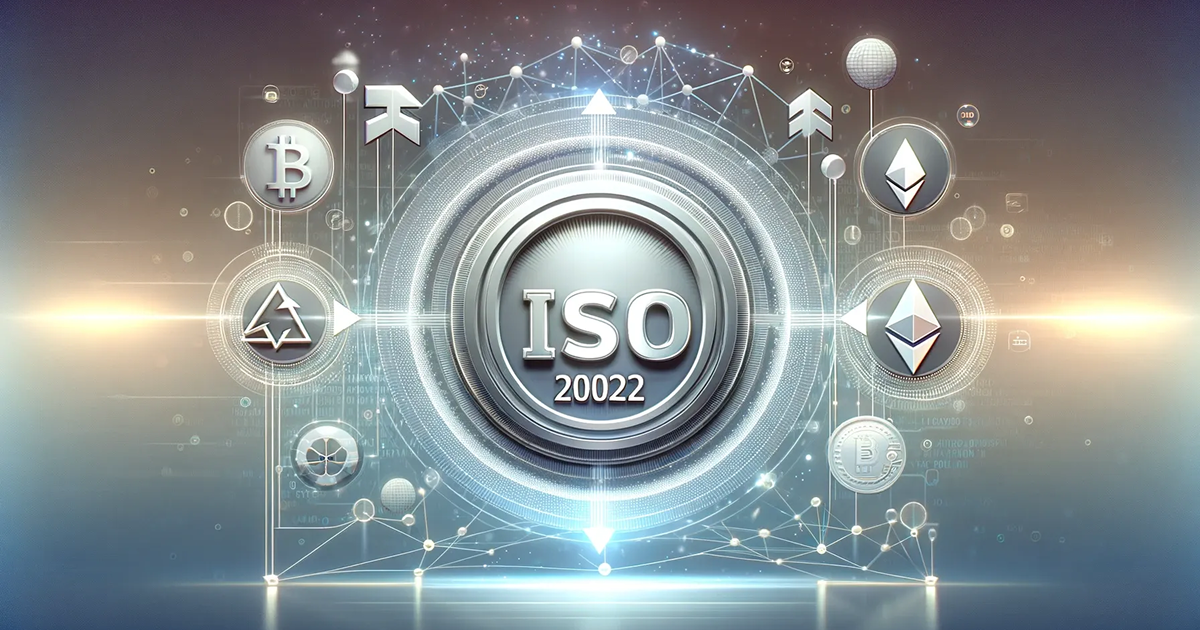
The need for standardized and efficient communication is more critical than ever in the world of global finance. Enter ISO 20022, a framework introduced in 2004 by the International Organization for Standardization (ISO). This framework was designed to create a unified language for financial messaging, addressing the inefficiencies and inconsistencies prevalent in the industry. This article aims to help readers understand ISO 20022, its scope, and its implications for the financial sector.
What is ISO 20022
ISO 20022 is a global standard for financial messaging that provides a framework for the development of financial communication standards. Established by the International Organization for Standardization (ISO), ISO 20022 aims to enhance the efficiency, effectiveness, and interoperability of financial transactions across the globe.
At its core, ISO 20022 is designed to address the need for a common language and model for financial data. This standard encompasses a wide range of financial transactions, including payments, securities, trade services, cards, and foreign exchange. Unlike previous messaging standards, ISO 20022 is highly flexible and can be adapted to meet the specific needs of different financial markets and institutions.
Who is ISO 20022 for
ISO 20022 is relevant to a broad spectrum of stakeholders within the financial ecosystem, including:
- Banks and Financial Institutions: These entities are at the forefront of adopting ISO 20022 as it directly impacts their operations, from cross-border payments to securities transactions.
- Payment Service Providers: Companies that facilitate payment transactions can leverage ISO 20022 to streamline their processes and improve interoperability.
- Corporates and Businesses: Large corporations engaging in international trade and transactions benefit from the standard’s ability to provide rich, structured data.
- Market Infrastructures: Central banks, clearing houses, and other market infrastructures adopt ISO 20022 to ensure seamless transactions and data exchange across different systems.
- Regulatory Bodies: Regulators can use ISO 20022 to enhance the transparency and traceability of financial transactions, aiding in compliance and monitoring efforts.

The motivation behind the introduction of ISO 20022
The introduction of ISO 20022 was driven by the need to address several inefficiencies and inconsistencies in the global financial messaging system. The motivations behind this standard can be broadly categorized into improving data quality, enhancing interoperability, ensuring regulatory compliance, and fostering innovation in financial services.
1. Improving data quality and consistency in financial messaging
One of the primary motivations for ISO 20022 was to improve the quality and consistency of financial data. Before ISO 20022, different financial institutions and markets used various messaging standards, leading to a fragmented landscape with inconsistent data formats and structures. This fragmentation resulted in data inaccuracies, processing errors, and increased costs due to the need for manual interventions.
ISO 20022 provides a common framework for financial messaging, ensuring that data is structured and formatted consistently across different systems and markets. This standardization improves data quality, reduces errors, and enhances the efficiency of financial transactions.
2. Enhancing interoperability and harmonization across global financial systems
The global financial market operates on a network of interconnected systems, each with its own messaging protocols and standards. The lack of a unified standard created barriers to interoperability, making it challenging for financial institutions to communicate and transact seamlessly across borders.
ISO 20022 was introduced to address this issue by providing a common language for financial messaging. By facilitating interoperability between different systems and markets, ISO 20022 enhances global financial integration and reduces the complexity and cost of cross-border transactions.
3. Ensuring regulatory compliance with comprehensive data standards
Regulatory compliance is a critical aspect of the financial industry. Different regions have varying regulatory requirements, and the lack of standardized messaging made it difficult for financial institutions to comply with these regulations efficiently.
ISO 20022 offers a standardized approach to financial messaging that aligns with regulatory requirements, making it easier for institutions to meet compliance obligations. The standard's rich data set provides detailed information that supports regulatory reporting and monitoring, enhancing transparency and reducing the risk of non-compliance.
4. Fostering innovation and adaptability in financial services
The financial industry is constantly evolving, with new technologies and business models emerging regularly. Legacy messaging standards were not flexible enough to support these innovations, creating a need for a more adaptable and forward-looking standard.
ISO 20022 was designed with flexibility in mind, allowing it to support a wide range of financial services and accommodate future innovations. This adaptability makes it easier for financial institutions to develop and implement new products and services, driving innovation and competition in the industry.
5. Cryptocurrency and the need for digital assets in standardization
Although they are not the primary drivers, cryptocurrency and digital assets have indeed played a role in the motivation to adopt ISO 20022 in organizations. The rise of cryptocurrencies has highlighted the need for more robust and flexible messaging standards that can support the unique requirements of digital assets.
ISO 20022's flexible framework makes it well-suited to accommodate the complexities of cryptocurrency transactions, such as the need for detailed metadata and the ability to handle diverse transaction types. As the financial industry continues to explore the integration of digital assets into traditional financial systems, ISO 20022 provides a standardized approach that can facilitate this integration.
The implications of ISO 20022 on the market
One of the primary advantages of ISO 20022 is its ability to carry richer and more structured data compared to legacy standards like ISO 15022 or SWIFT MT messages. This enriched data improves the quality and detail of information exchanged, enabling better decision-making and reconciliation processes.
ISO 20022 is designed with a global perspective, facilitating interoperability between different financial systems and institutions. This global standardization reduces the friction in cross-border transactions, making international payments faster and more reliable.
With ISO 20022, financial institutions can automate and streamline their processes, reducing manual intervention and the associated risk of errors. This efficiency translates into cost savings and improved operational performance.
The structured data provided by ISO 20022 aids in compliance with regulatory requirements by offering greater transparency and traceability of financial transactions. Financial institutions can more easily monitor and report activities, reducing the risk of non-compliance and associated penalties.

Who should consider compliance with ISO 20022
1. Financial institutions and banks
Banks and financial institutions should prioritize ISO 20022 to stay competitive in the evolving financial landscape. By adopting this standard, they can offer enhanced services to their clients, such as faster cross-border payments and better data analytics.
2. Payment service providers
Payment service providers stand to gain significantly from ISO 20022 by improving the speed and reliability of their services. The enriched data also allows for better fraud detection and prevention measures.
3. Corporates and large enterprises
Corporates engaged in international business should consider ISO 20022 to streamline their financial operations. The standard’s ability to provide detailed transaction data can improve cash management, forecasting, and reconciliation processes.
4. Market infrastructures
Central banks, clearing houses, and other market infrastructures should adopt ISO 20022 to ensure compatibility with global standards. This adoption is crucial for maintaining the efficiency and integrity of financial markets.
5. Regulatory bodies
Regulators can leverage ISO 20022 to enhance their oversight capabilities. The structured data facilitates better monitoring and analysis of financial transactions, aiding in the enforcement of regulatory compliance.
The path to ISO 20022 adoption
Before adopting ISO 20022, financial institutions need to assess their current systems and processes. This assessment should identify gaps and areas that require upgrading to support the new standard.
A well-defined migration strategy is key for a successful transition to ISO 20022. This strategy should outline the key milestones, resources required, and a timeline for implementation. (Financial) institutions should also consider the potential impact on their clients and stakeholders.
Moreover, adopting ISO 20022 often necessitates significant investment in technology. Institutions may need to upgrade their core banking systems, payment platforms, and data management tools to support the new standard.
Successful adoption of ISO 20022 also requires comprehensive training and change management initiatives. Employees need to be educated about the new standard and its implications for their daily operations. Change management programs should also address potential resistance and ensure smooth transition.
Collaboration with industry partners, including other financial institutions, payment service providers, and technology vendors (like Blocshop, for example), is essential for the successful adoption of ISO 20022. These partnerships can provide valuable insights, resources, and support throughout the migration process.
Case studies: Successful ISO 20022 adoption
SWIFT GPI
The SWIFT global payments innovation (GPI) initiative is one of the most notable examples of successful ISO 20022 adoption. Launched by SWIFT, GPI aims to improve the speed, transparency, and traceability of cross-border payments. Leveraging ISO 20022 helped achieve significant improvements in payment processing times and customer satisfaction.
European Central Bank (ECB)
The ECB’s TARGET2 and TARGET2-Securities (T2S) systems have adopted ISO 20022 to enhance the efficiency and interoperability of Europe’s payment and securities settlement systems. This adoption has streamlined operations and improved the overall resilience of the financial infrastructure.
The Federal Reserve and CHIPS
In the United States, the Federal Reserve and the Clearing House Interbank Payments System (CHIPS) are working towards adopting ISO 20022 for their high-value payment systems. This transition aims to modernize the US payment infrastructure and align it with global standards.

ISO 20022 challenges and considerations
While the benefits of ISO 20022 are clear, there are challenges that institutions must address to ensure a smooth and successful transition. These challenges are particularly relevant for financial managers who must weigh the benefits against the complexities of implementation. Here, we delve deeper into the specific considerations:
Initial costs of transition
The transition to ISO 20022 involves significant upfront costs. Financial managers must account for expenses related to system upgrades, software acquisitions, and staff training. Conducting a detailed cost-benefit analysis can justify the investment and help secure funding and support from executive leadership. Planning for phased spending can also help spread out costs over time.
The complexity of migration to new standards and navigating legacy systems
Migrating from legacy systems to ISO 20022 can be complex. Financial institutions often operate on outdated technology that is not easily compatible with the new standard. Financial managers need to map out existing processes and develop a step-by-step migration plan with clear timelines and milestones. Engaging with IT specialists and third-party vendors experienced in ISO 20022 implementation can mitigate risks and ensure a smoother transition.
Interoperability issues and integration with non-adopters
Ensuring interoperability with institutions that have not yet adopted ISO 20022 can be challenging. Investing in middleware solutions can bridge the gap between ISO 20022 and legacy systems. Establishing protocols for dual-message processing can also help maintain seamless operations. Collaboration with other financial institutions and industry bodies is essential to promote widespread adoption and address compatibility issues.
Lacking regulatory alignment and varying regional requirements
Different regions may have varying regulatory requirements, complicating the adoption process. Financial managers need to stay informed about regulatory developments in key markets and work closely with compliance teams to align ISO 20022 implementation with regulatory requirements. Participating in industry forums and working groups can influence regulatory standards and support ISO 20022 adoption.
Change management addressing organizational shifts
Adopting ISO 20022 requires technological changes and significant organizational and cultural shifts. Developing a comprehensive change management strategy that includes communication, training, and support is extremely important. Financial managers should foster a culture of innovation and continuous improvement to encourage staff engagement and monitor and address any resistance to change through regular feedback and support mechanisms.
Long-term maintenance to sustain the benefits of ISO 20022
Once ISO 20022 is implemented, institutions must focus on maintaining and optimizing the system to sustain its benefits. Establishing a dedicated team to oversee ISO 20022 maintenance and updates, implementing regular review cycles to assess system performance, and investing in ongoing training programs for staff can ensure the system's long-term success.

Why consult experts?
Given these challenges, consulting with IT experts experienced in fintech, such as Blocshop, can be immensely beneficial. These consultants can:
- Provide technical expertise: Experts can offer valuable insights into the technical requirements and best practices for ISO 20022 implementation, ensuring a smoother transition.
- Develop customized solutions: Consultants can tailor solutions to fit the specific needs of your institution, addressing unique challenges and optimizing existing systems for the new standard.
- Offer training and support: Comprehensive training programs and ongoing support from experienced consultants can help your team adapt to the new standard, minimizing resistance and ensuring long-term success.
- Ensure regulatory compliance: Staying abreast of regulatory developments and aligning your implementation strategy with these requirements can be simplified with expert guidance.
- Facilitate interoperability: Consultants can help design and implement middleware solutions and dual-message processing protocols to maintain seamless operations with non-adopters.
Take action today
The transition to ISO 20022 is a strategic move that can significantly enhance your institution’s operational efficiency and competitive edge. While the journey involves overcoming several hurdles, the potential rewards are substantial. By partnering with knowledgeable IT consultants, you can navigate the complexities of this transition more effectively, ensuring that your institution is well-prepared for the future of global finance.
Embrace ISO 20022 and position your institution at the forefront of financial innovation and efficiency. Consult with experts like Blocshop to make this transformative journey smoother and more successful.
Take the first step today - contact Blocshop for a meeting to discuss your ISO 20022 transition.
Learn more from our insights











© 2026 Blocshop s.r.o. All rights reserved.


blog
May 28, 2024
ISO 20022 Explained: A Comprehensive Guide for Financial Institution Managers
The need for standardized and efficient communication is more critical than ever in the world of global finance. Enter ISO 20022, a framework introduced in 2004 by the International Organization for Standardization (ISO). This framework was designed to create a unified language for financial messaging, addressing the inefficiencies and inconsistencies prevalent in the industry. This article aims to help readers understand ISO 20022, its scope, and its implications for the financial sector.
What is ISO 20022
ISO 20022 is a global standard for financial messaging that provides a framework for the development of financial communication standards. Established by the International Organization for Standardization (ISO), ISO 20022 aims to enhance the efficiency, effectiveness, and interoperability of financial transactions across the globe.
At its core, ISO 20022 is designed to address the need for a common language and model for financial data. This standard encompasses a wide range of financial transactions, including payments, securities, trade services, cards, and foreign exchange. Unlike previous messaging standards, ISO 20022 is highly flexible and can be adapted to meet the specific needs of different financial markets and institutions.
Who is ISO 20022 for
ISO 20022 is relevant to a broad spectrum of stakeholders within the financial ecosystem, including:
- Banks and Financial Institutions: These entities are at the forefront of adopting ISO 20022 as it directly impacts their operations, from cross-border payments to securities transactions.
- Payment Service Providers: Companies that facilitate payment transactions can leverage ISO 20022 to streamline their processes and improve interoperability.
- Corporates and Businesses: Large corporations engaging in international trade and transactions benefit from the standard’s ability to provide rich, structured data.
- Market Infrastructures: Central banks, clearing houses, and other market infrastructures adopt ISO 20022 to ensure seamless transactions and data exchange across different systems.
- Regulatory Bodies: Regulators can use ISO 20022 to enhance the transparency and traceability of financial transactions, aiding in compliance and monitoring efforts.
The motivation behind the introduction of ISO 20022
The introduction of ISO 20022 was driven by the need to address several inefficiencies and inconsistencies in the global financial messaging system. The motivations behind this standard can be broadly categorized into improving data quality, enhancing interoperability, ensuring regulatory compliance, and fostering innovation in financial services.
1. Improving data quality and consistency in financial messaging
One of the primary motivations for ISO 20022 was to improve the quality and consistency of financial data. Before ISO 20022, different financial institutions and markets used various messaging standards, leading to a fragmented landscape with inconsistent data formats and structures. This fragmentation resulted in data inaccuracies, processing errors, and increased costs due to the need for manual interventions.
ISO 20022 provides a common framework for financial messaging, ensuring that data is structured and formatted consistently across different systems and markets. This standardization improves data quality, reduces errors, and enhances the efficiency of financial transactions.
2. Enhancing interoperability and harmonization across global financial systems
The global financial market operates on a network of interconnected systems, each with its own messaging protocols and standards. The lack of a unified standard created barriers to interoperability, making it challenging for financial institutions to communicate and transact seamlessly across borders.
ISO 20022 was introduced to address this issue by providing a common language for financial messaging. By facilitating interoperability between different systems and markets, ISO 20022 enhances global financial integration and reduces the complexity and cost of cross-border transactions.
3. Ensuring regulatory compliance with comprehensive data standards
Regulatory compliance is a critical aspect of the financial industry. Different regions have varying regulatory requirements, and the lack of standardized messaging made it difficult for financial institutions to comply with these regulations efficiently.
ISO 20022 offers a standardized approach to financial messaging that aligns with regulatory requirements, making it easier for institutions to meet compliance obligations. The standard's rich data set provides detailed information that supports regulatory reporting and monitoring, enhancing transparency and reducing the risk of non-compliance.
4. Fostering innovation and adaptability in financial services
The financial industry is constantly evolving, with new technologies and business models emerging regularly. Legacy messaging standards were not flexible enough to support these innovations, creating a need for a more adaptable and forward-looking standard.
ISO 20022 was designed with flexibility in mind, allowing it to support a wide range of financial services and accommodate future innovations. This adaptability makes it easier for financial institutions to develop and implement new products and services, driving innovation and competition in the industry.
5. Cryptocurrency and the need for digital assets in standardization
Although they are not the primary drivers, cryptocurrency and digital assets have indeed played a role in the motivation to adopt ISO 20022 in organizations. The rise of cryptocurrencies has highlighted the need for more robust and flexible messaging standards that can support the unique requirements of digital assets.
ISO 20022's flexible framework makes it well-suited to accommodate the complexities of cryptocurrency transactions, such as the need for detailed metadata and the ability to handle diverse transaction types. As the financial industry continues to explore the integration of digital assets into traditional financial systems, ISO 20022 provides a standardized approach that can facilitate this integration.
The implications of ISO 20022 on the market
One of the primary advantages of ISO 20022 is its ability to carry richer and more structured data compared to legacy standards like ISO 15022 or SWIFT MT messages. This enriched data improves the quality and detail of information exchanged, enabling better decision-making and reconciliation processes.
ISO 20022 is designed with a global perspective, facilitating interoperability between different financial systems and institutions. This global standardization reduces the friction in cross-border transactions, making international payments faster and more reliable.
With ISO 20022, financial institutions can automate and streamline their processes, reducing manual intervention and the associated risk of errors. This efficiency translates into cost savings and improved operational performance.
The structured data provided by ISO 20022 aids in compliance with regulatory requirements by offering greater transparency and traceability of financial transactions. Financial institutions can more easily monitor and report activities, reducing the risk of non-compliance and associated penalties.
Who should consider compliance with ISO 20022
1. Financial institutions and banks
Banks and financial institutions should prioritize ISO 20022 to stay competitive in the evolving financial landscape. By adopting this standard, they can offer enhanced services to their clients, such as faster cross-border payments and better data analytics.
2. Payment service providers
Payment service providers stand to gain significantly from ISO 20022 by improving the speed and reliability of their services. The enriched data also allows for better fraud detection and prevention measures.
3. Corporates and large enterprises
Corporates engaged in international business should consider ISO 20022 to streamline their financial operations. The standard’s ability to provide detailed transaction data can improve cash management, forecasting, and reconciliation processes.
4. Market infrastructures
Central banks, clearing houses, and other market infrastructures should adopt ISO 20022 to ensure compatibility with global standards. This adoption is crucial for maintaining the efficiency and integrity of financial markets.
5. Regulatory bodies
Regulators can leverage ISO 20022 to enhance their oversight capabilities. The structured data facilitates better monitoring and analysis of financial transactions, aiding in the enforcement of regulatory compliance.
The path to ISO 20022 adoption
Before adopting ISO 20022, financial institutions need to assess their current systems and processes. This assessment should identify gaps and areas that require upgrading to support the new standard.
A well-defined migration strategy is key for a successful transition to ISO 20022. This strategy should outline the key milestones, resources required, and a timeline for implementation. (Financial) institutions should also consider the potential impact on their clients and stakeholders.
Moreover, adopting ISO 20022 often necessitates significant investment in technology. Institutions may need to upgrade their core banking systems, payment platforms, and data management tools to support the new standard.
Successful adoption of ISO 20022 also requires comprehensive training and change management initiatives. Employees need to be educated about the new standard and its implications for their daily operations. Change management programs should also address potential resistance and ensure smooth transition.
Collaboration with industry partners, including other financial institutions, payment service providers, and technology vendors (like Blocshop, for example), is essential for the successful adoption of ISO 20022. These partnerships can provide valuable insights, resources, and support throughout the migration process.
Case studies: Successful ISO 20022 adoption
SWIFT GPI
The SWIFT global payments innovation (GPI) initiative is one of the most notable examples of successful ISO 20022 adoption. Launched by SWIFT, GPI aims to improve the speed, transparency, and traceability of cross-border payments. Leveraging ISO 20022 helped achieve significant improvements in payment processing times and customer satisfaction.
European Central Bank (ECB)
The ECB’s TARGET2 and TARGET2-Securities (T2S) systems have adopted ISO 20022 to enhance the efficiency and interoperability of Europe’s payment and securities settlement systems. This adoption has streamlined operations and improved the overall resilience of the financial infrastructure.
The Federal Reserve and CHIPS
In the United States, the Federal Reserve and the Clearing House Interbank Payments System (CHIPS) are working towards adopting ISO 20022 for their high-value payment systems. This transition aims to modernize the US payment infrastructure and align it with global standards.
ISO 20022 challenges and considerations
While the benefits of ISO 20022 are clear, there are challenges that institutions must address to ensure a smooth and successful transition. These challenges are particularly relevant for financial managers who must weigh the benefits against the complexities of implementation. Here, we delve deeper into the specific considerations:
Initial costs of transition
The transition to ISO 20022 involves significant upfront costs. Financial managers must account for expenses related to system upgrades, software acquisitions, and staff training. Conducting a detailed cost-benefit analysis can justify the investment and help secure funding and support from executive leadership. Planning for phased spending can also help spread out costs over time.
The complexity of migration to new standards and navigating legacy systems
Migrating from legacy systems to ISO 20022 can be complex. Financial institutions often operate on outdated technology that is not easily compatible with the new standard. Financial managers need to map out existing processes and develop a step-by-step migration plan with clear timelines and milestones. Engaging with IT specialists and third-party vendors experienced in ISO 20022 implementation can mitigate risks and ensure a smoother transition.
Interoperability issues and integration with non-adopters
Ensuring interoperability with institutions that have not yet adopted ISO 20022 can be challenging. Investing in middleware solutions can bridge the gap between ISO 20022 and legacy systems. Establishing protocols for dual-message processing can also help maintain seamless operations. Collaboration with other financial institutions and industry bodies is essential to promote widespread adoption and address compatibility issues.
Lacking regulatory alignment and varying regional requirements
Different regions may have varying regulatory requirements, complicating the adoption process. Financial managers need to stay informed about regulatory developments in key markets and work closely with compliance teams to align ISO 20022 implementation with regulatory requirements. Participating in industry forums and working groups can influence regulatory standards and support ISO 20022 adoption.
Change management addressing organizational shifts
Adopting ISO 20022 requires technological changes and significant organizational and cultural shifts. Developing a comprehensive change management strategy that includes communication, training, and support is extremely important. Financial managers should foster a culture of innovation and continuous improvement to encourage staff engagement and monitor and address any resistance to change through regular feedback and support mechanisms.
Long-term maintenance to sustain the benefits of ISO 20022
Once ISO 20022 is implemented, institutions must focus on maintaining and optimizing the system to sustain its benefits. Establishing a dedicated team to oversee ISO 20022 maintenance and updates, implementing regular review cycles to assess system performance, and investing in ongoing training programs for staff can ensure the system's long-term success.
Why consult experts?
Given these challenges, consulting with IT experts experienced in fintech, such as Blocshop, can be immensely beneficial. These consultants can:
- Provide technical expertise: Experts can offer valuable insights into the technical requirements and best practices for ISO 20022 implementation, ensuring a smoother transition.
- Develop customized solutions: Consultants can tailor solutions to fit the specific needs of your institution, addressing unique challenges and optimizing existing systems for the new standard.
- Offer training and support: Comprehensive training programs and ongoing support from experienced consultants can help your team adapt to the new standard, minimizing resistance and ensuring long-term success.
- Ensure regulatory compliance: Staying abreast of regulatory developments and aligning your implementation strategy with these requirements can be simplified with expert guidance.
- Facilitate interoperability: Consultants can help design and implement middleware solutions and dual-message processing protocols to maintain seamless operations with non-adopters.
Take action today
The transition to ISO 20022 is a strategic move that can significantly enhance your institution’s operational efficiency and competitive edge. While the journey involves overcoming several hurdles, the potential rewards are substantial. By partnering with knowledgeable IT consultants, you can navigate the complexities of this transition more effectively, ensuring that your institution is well-prepared for the future of global finance.
Embrace ISO 20022 and position your institution at the forefront of financial innovation and efficiency. Consult with experts like Blocshop to make this transformative journey smoother and more successful.
Take the first step today - contact Blocshop for a meeting to discuss your ISO 20022 transition.
Learn more from our insights

Talk to sales

© 2026 Blocshop s.r.o. All rights reserved.
blog
May 28, 2024
ISO 20022 Explained: A Comprehensive Guide for Financial Institution Managers
The need for standardized and efficient communication is more critical than ever in the world of global finance. Enter ISO 20022, a framework introduced in 2004 by the International Organization for Standardization (ISO). This framework was designed to create a unified language for financial messaging, addressing the inefficiencies and inconsistencies prevalent in the industry. This article aims to help readers understand ISO 20022, its scope, and its implications for the financial sector.
What is ISO 20022
ISO 20022 is a global standard for financial messaging that provides a framework for the development of financial communication standards. Established by the International Organization for Standardization (ISO), ISO 20022 aims to enhance the efficiency, effectiveness, and interoperability of financial transactions across the globe.
At its core, ISO 20022 is designed to address the need for a common language and model for financial data. This standard encompasses a wide range of financial transactions, including payments, securities, trade services, cards, and foreign exchange. Unlike previous messaging standards, ISO 20022 is highly flexible and can be adapted to meet the specific needs of different financial markets and institutions.
Who is ISO 20022 for
ISO 20022 is relevant to a broad spectrum of stakeholders within the financial ecosystem, including:
- Banks and Financial Institutions: These entities are at the forefront of adopting ISO 20022 as it directly impacts their operations, from cross-border payments to securities transactions.
- Payment Service Providers: Companies that facilitate payment transactions can leverage ISO 20022 to streamline their processes and improve interoperability.
- Corporates and Businesses: Large corporations engaging in international trade and transactions benefit from the standard’s ability to provide rich, structured data.
- Market Infrastructures: Central banks, clearing houses, and other market infrastructures adopt ISO 20022 to ensure seamless transactions and data exchange across different systems.
- Regulatory Bodies: Regulators can use ISO 20022 to enhance the transparency and traceability of financial transactions, aiding in compliance and monitoring efforts.
The motivation behind the introduction of ISO 20022
The introduction of ISO 20022 was driven by the need to address several inefficiencies and inconsistencies in the global financial messaging system. The motivations behind this standard can be broadly categorized into improving data quality, enhancing interoperability, ensuring regulatory compliance, and fostering innovation in financial services.
1. Improving data quality and consistency in financial messaging
One of the primary motivations for ISO 20022 was to improve the quality and consistency of financial data. Before ISO 20022, different financial institutions and markets used various messaging standards, leading to a fragmented landscape with inconsistent data formats and structures. This fragmentation resulted in data inaccuracies, processing errors, and increased costs due to the need for manual interventions.
ISO 20022 provides a common framework for financial messaging, ensuring that data is structured and formatted consistently across different systems and markets. This standardization improves data quality, reduces errors, and enhances the efficiency of financial transactions.
2. Enhancing interoperability and harmonization across global financial systems
The global financial market operates on a network of interconnected systems, each with its own messaging protocols and standards. The lack of a unified standard created barriers to interoperability, making it challenging for financial institutions to communicate and transact seamlessly across borders.
ISO 20022 was introduced to address this issue by providing a common language for financial messaging. By facilitating interoperability between different systems and markets, ISO 20022 enhances global financial integration and reduces the complexity and cost of cross-border transactions.
3. Ensuring regulatory compliance with comprehensive data standards
Regulatory compliance is a critical aspect of the financial industry. Different regions have varying regulatory requirements, and the lack of standardized messaging made it difficult for financial institutions to comply with these regulations efficiently.
ISO 20022 offers a standardized approach to financial messaging that aligns with regulatory requirements, making it easier for institutions to meet compliance obligations. The standard's rich data set provides detailed information that supports regulatory reporting and monitoring, enhancing transparency and reducing the risk of non-compliance.
4. Fostering innovation and adaptability in financial services
The financial industry is constantly evolving, with new technologies and business models emerging regularly. Legacy messaging standards were not flexible enough to support these innovations, creating a need for a more adaptable and forward-looking standard.
ISO 20022 was designed with flexibility in mind, allowing it to support a wide range of financial services and accommodate future innovations. This adaptability makes it easier for financial institutions to develop and implement new products and services, driving innovation and competition in the industry.
5. Cryptocurrency and the need for digital assets in standardization
Although they are not the primary drivers, cryptocurrency and digital assets have indeed played a role in the motivation to adopt ISO 20022 in organizations. The rise of cryptocurrencies has highlighted the need for more robust and flexible messaging standards that can support the unique requirements of digital assets.
ISO 20022's flexible framework makes it well-suited to accommodate the complexities of cryptocurrency transactions, such as the need for detailed metadata and the ability to handle diverse transaction types. As the financial industry continues to explore the integration of digital assets into traditional financial systems, ISO 20022 provides a standardized approach that can facilitate this integration.
The implications of ISO 20022 on the market
One of the primary advantages of ISO 20022 is its ability to carry richer and more structured data compared to legacy standards like ISO 15022 or SWIFT MT messages. This enriched data improves the quality and detail of information exchanged, enabling better decision-making and reconciliation processes.
ISO 20022 is designed with a global perspective, facilitating interoperability between different financial systems and institutions. This global standardization reduces the friction in cross-border transactions, making international payments faster and more reliable.
With ISO 20022, financial institutions can automate and streamline their processes, reducing manual intervention and the associated risk of errors. This efficiency translates into cost savings and improved operational performance.
The structured data provided by ISO 20022 aids in compliance with regulatory requirements by offering greater transparency and traceability of financial transactions. Financial institutions can more easily monitor and report activities, reducing the risk of non-compliance and associated penalties.
Who should consider compliance with ISO 20022
1. Financial institutions and banks
Banks and financial institutions should prioritize ISO 20022 to stay competitive in the evolving financial landscape. By adopting this standard, they can offer enhanced services to their clients, such as faster cross-border payments and better data analytics.
2. Payment service providers
Payment service providers stand to gain significantly from ISO 20022 by improving the speed and reliability of their services. The enriched data also allows for better fraud detection and prevention measures.
3. Corporates and large enterprises
Corporates engaged in international business should consider ISO 20022 to streamline their financial operations. The standard’s ability to provide detailed transaction data can improve cash management, forecasting, and reconciliation processes.
4. Market infrastructures
Central banks, clearing houses, and other market infrastructures should adopt ISO 20022 to ensure compatibility with global standards. This adoption is crucial for maintaining the efficiency and integrity of financial markets.
5. Regulatory bodies
Regulators can leverage ISO 20022 to enhance their oversight capabilities. The structured data facilitates better monitoring and analysis of financial transactions, aiding in the enforcement of regulatory compliance.
The path to ISO 20022 adoption
Before adopting ISO 20022, financial institutions need to assess their current systems and processes. This assessment should identify gaps and areas that require upgrading to support the new standard.
A well-defined migration strategy is key for a successful transition to ISO 20022. This strategy should outline the key milestones, resources required, and a timeline for implementation. (Financial) institutions should also consider the potential impact on their clients and stakeholders.
Moreover, adopting ISO 20022 often necessitates significant investment in technology. Institutions may need to upgrade their core banking systems, payment platforms, and data management tools to support the new standard.
Successful adoption of ISO 20022 also requires comprehensive training and change management initiatives. Employees need to be educated about the new standard and its implications for their daily operations. Change management programs should also address potential resistance and ensure smooth transition.
Collaboration with industry partners, including other financial institutions, payment service providers, and technology vendors (like Blocshop, for example), is essential for the successful adoption of ISO 20022. These partnerships can provide valuable insights, resources, and support throughout the migration process.
Case studies: Successful ISO 20022 adoption
SWIFT GPI
The SWIFT global payments innovation (GPI) initiative is one of the most notable examples of successful ISO 20022 adoption. Launched by SWIFT, GPI aims to improve the speed, transparency, and traceability of cross-border payments. Leveraging ISO 20022 helped achieve significant improvements in payment processing times and customer satisfaction.
European Central Bank (ECB)
The ECB’s TARGET2 and TARGET2-Securities (T2S) systems have adopted ISO 20022 to enhance the efficiency and interoperability of Europe’s payment and securities settlement systems. This adoption has streamlined operations and improved the overall resilience of the financial infrastructure.
The Federal Reserve and CHIPS
In the United States, the Federal Reserve and the Clearing House Interbank Payments System (CHIPS) are working towards adopting ISO 20022 for their high-value payment systems. This transition aims to modernize the US payment infrastructure and align it with global standards.
ISO 20022 challenges and considerations
While the benefits of ISO 20022 are clear, there are challenges that institutions must address to ensure a smooth and successful transition. These challenges are particularly relevant for financial managers who must weigh the benefits against the complexities of implementation. Here, we delve deeper into the specific considerations:
Initial costs of transition
The transition to ISO 20022 involves significant upfront costs. Financial managers must account for expenses related to system upgrades, software acquisitions, and staff training. Conducting a detailed cost-benefit analysis can justify the investment and help secure funding and support from executive leadership. Planning for phased spending can also help spread out costs over time.
The complexity of migration to new standards and navigating legacy systems
Migrating from legacy systems to ISO 20022 can be complex. Financial institutions often operate on outdated technology that is not easily compatible with the new standard. Financial managers need to map out existing processes and develop a step-by-step migration plan with clear timelines and milestones. Engaging with IT specialists and third-party vendors experienced in ISO 20022 implementation can mitigate risks and ensure a smoother transition.
Interoperability issues and integration with non-adopters
Ensuring interoperability with institutions that have not yet adopted ISO 20022 can be challenging. Investing in middleware solutions can bridge the gap between ISO 20022 and legacy systems. Establishing protocols for dual-message processing can also help maintain seamless operations. Collaboration with other financial institutions and industry bodies is essential to promote widespread adoption and address compatibility issues.
Lacking regulatory alignment and varying regional requirements
Different regions may have varying regulatory requirements, complicating the adoption process. Financial managers need to stay informed about regulatory developments in key markets and work closely with compliance teams to align ISO 20022 implementation with regulatory requirements. Participating in industry forums and working groups can influence regulatory standards and support ISO 20022 adoption.
Change management addressing organizational shifts
Adopting ISO 20022 requires technological changes and significant organizational and cultural shifts. Developing a comprehensive change management strategy that includes communication, training, and support is extremely important. Financial managers should foster a culture of innovation and continuous improvement to encourage staff engagement and monitor and address any resistance to change through regular feedback and support mechanisms.
Long-term maintenance to sustain the benefits of ISO 20022
Once ISO 20022 is implemented, institutions must focus on maintaining and optimizing the system to sustain its benefits. Establishing a dedicated team to oversee ISO 20022 maintenance and updates, implementing regular review cycles to assess system performance, and investing in ongoing training programs for staff can ensure the system's long-term success.
Why consult experts?
Given these challenges, consulting with IT experts experienced in fintech, such as Blocshop, can be immensely beneficial. These consultants can:
- Provide technical expertise: Experts can offer valuable insights into the technical requirements and best practices for ISO 20022 implementation, ensuring a smoother transition.
- Develop customized solutions: Consultants can tailor solutions to fit the specific needs of your institution, addressing unique challenges and optimizing existing systems for the new standard.
- Offer training and support: Comprehensive training programs and ongoing support from experienced consultants can help your team adapt to the new standard, minimizing resistance and ensuring long-term success.
- Ensure regulatory compliance: Staying abreast of regulatory developments and aligning your implementation strategy with these requirements can be simplified with expert guidance.
- Facilitate interoperability: Consultants can help design and implement middleware solutions and dual-message processing protocols to maintain seamless operations with non-adopters.
Take action today
The transition to ISO 20022 is a strategic move that can significantly enhance your institution’s operational efficiency and competitive edge. While the journey involves overcoming several hurdles, the potential rewards are substantial. By partnering with knowledgeable IT consultants, you can navigate the complexities of this transition more effectively, ensuring that your institution is well-prepared for the future of global finance.
Embrace ISO 20022 and position your institution at the forefront of financial innovation and efficiency. Consult with experts like Blocshop to make this transformative journey smoother and more successful.
Take the first step today - contact Blocshop for a meeting to discuss your ISO 20022 transition.
Learn more from our insights


© 2026 Blocshop s.r.o. All rights reserved.