
blog
June 15, 2021
SDLC vs Agile: Which one is the best?

What are the key differences between SDLC and Agile?
Software development teams developed several frameworks in order to organize their work. We refer to these frameworks as software development methodologies. The methodologies give teams a way to organize their work into sets of repeatable steps.
Today we will look at two major software development methodologies: SDLC and Agile.
SDLC
SDLC, or Software Development Life Cycle, came about in the 1960s to organize the development of the early information systems. Teams use SDLC to develop large software applications. SDLC should give teams a way to plan, gather requirements, develop and test their application. Several different models of software development use SDLC, including:
- Waterfall
- Interative
- Spiral
- V-model
- Extreme Programming (XP)
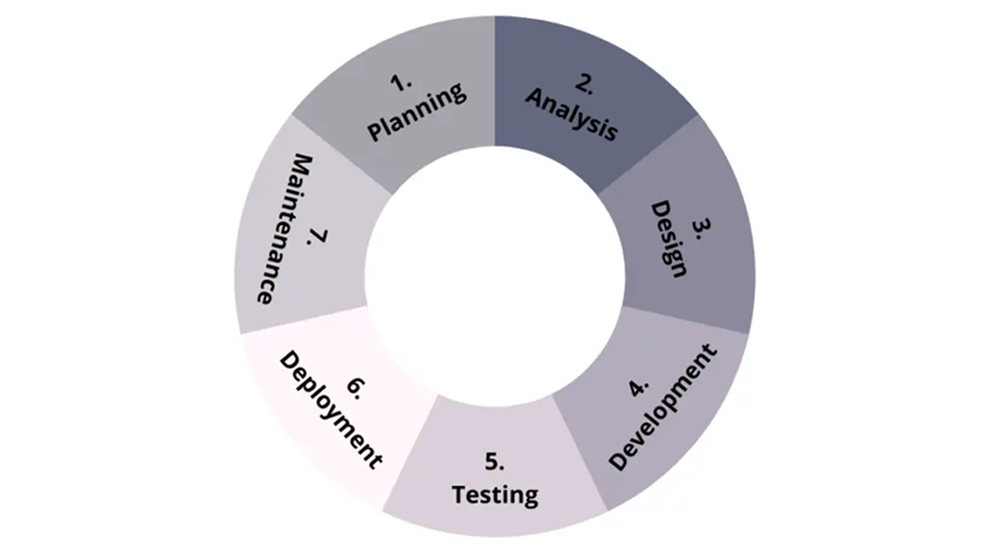
SDLC contains five distinct stages:
1. Planning: Teams use the planning stage to outline the development cycle and set objectives for the new project. They use the planning stage to set the project schedule. Teams also use the planning stage to define problems and set the scope of their work.
2. Analysis: In the analysis stage software development teams gather information and discuss possible prototypes. The team sets requirements and researches the needs of the end-users. They also will set and document technical requirements.
3. Design: in the design stage teams will create mock-ups of the user interfaces. They will map out database structures and system interfaces. The software development team will also finalize their network and infrastructure requirements.
4. Development: the development stage is the step where the team creates the actual code for the software development project. The software development team should be able to take this step on with ease. The previous steps should have set them up for straightforward success.
5. Testing: in the testing stage teams will check their application. They will look for bugs and broken code. They will search for defects. The software development team will ensure that the end-user experience meets the requirements.
Read more on the topic in Software Testing Life Cycle (STLC): Definition and phases article.
6. Implementation: After the team has completed testing, it’s time for implementation. If the team’s project adds new functionality to existing software, they will carefully integrate the new code into the existing software.
7. Maintenance: after implementation, the team doesn’t just forget about their project. They must maintain the software and correct any issues found by end-users.
Benefits of SDLC:
- Provides great clarity project development
- Documentation provides high-level information and details
- Limits the risk of project overruns or roadblocks
- Defines clear roles and responsibilities
Agile
When a development team uses the Agile methodology, they test often and thoroughly. Agile testing happens at the end of short development cycles called Sprints. Each Sprint consists of stages that usually include:
- Project planning and requirement analysis: The software development team begins by asking for user stories and business requirements. They will gather high-level information and get input from all stakeholders. The team should understand their goals and how they hope to achieve them.
- Roadmap: after their initial planning session the software development team will create a roadmap. The roadmap will list features and components that they will include in the final product.
- Release planning: Agile teams use release planning to map out each Sprint. They will determine which features they will add with each Sprint.
- Sprint planning: Before the team begins a Sprint, all stakeholders meet to set up tasks for the Sprint. They decide what each team member will do during the Sprint.
- Daily standup/Daily Scrum Meetings: A big part of Agile methodology. Teams meet for a very short time each day to discuss the previous day’s work and the work they plan on doing today. They discuss roadblocks and challenges.
- Sprint review and retrospective: teams meet with project stakeholders to show them the finished project. Then they will have a Sprint retrospective, where they discuss what went well and what they will improve upon in the next Sprint.
Benefits of Agile:
- Speedy development
- Greater project quality
- Higher customer satisfaction, user stories help guide teams to create software that users enjoy
- Steady improvement
- Transparency
Related post: Agile Software development team: Roles and responsibilities
So, what are the differences between Agile and SDLC?
Teams use Agile as a methodology. Teams use SDLC as a process. Agile takes advantage of Scrum to organize their Sprints. SDLC uses Waterfall, V-model or Sprial models to set up work. SDLC requires teams to produce very thorough documentation. Agile teams do not need to create very much documentation. In Agile teams focus instead on the fast delivery of results.
SDLC projects typically don’t have fixed time frames. Agile projects have precisely-timed sprints. SDLC works well for enterprise-level projects, teams using SDLC might find it too formal for smaller projects. Agile projects allow for dynamic changes. SDLC projects have to follow a more rigid structure.
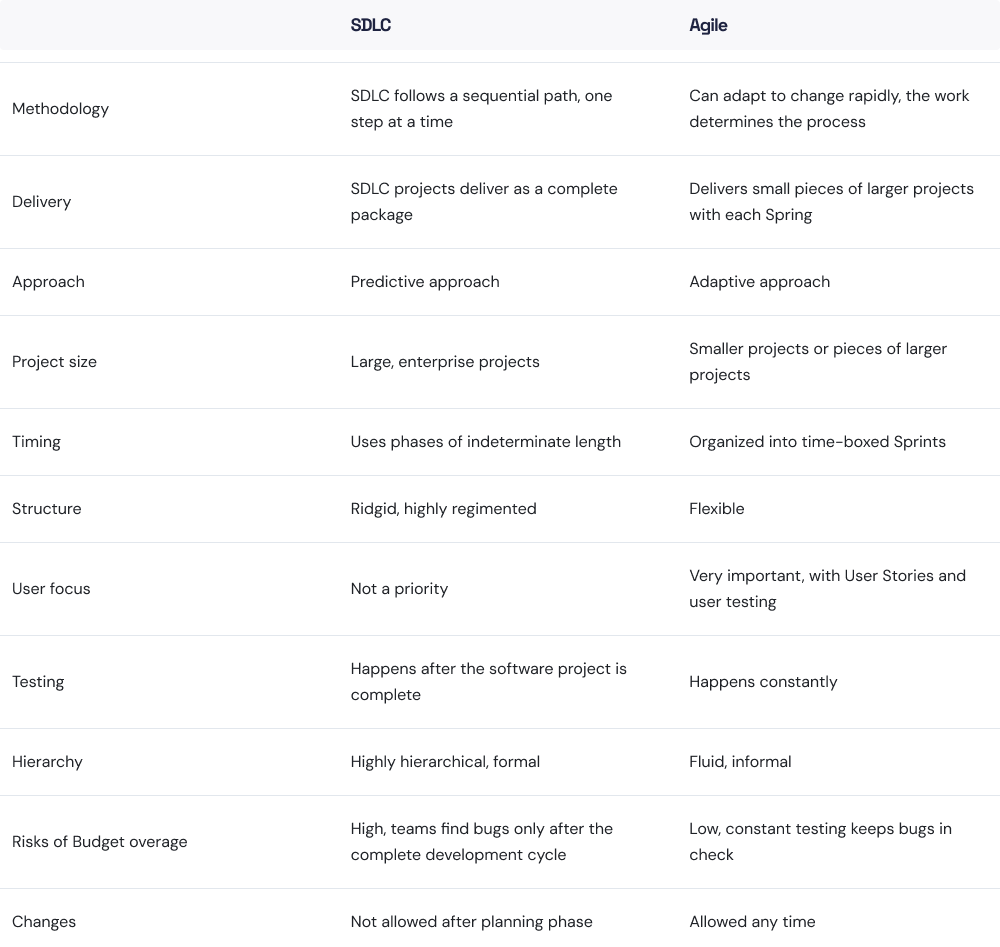
SDLC works best for enterprise-level projects. Teams using SDLC will have their work planned far in advance. Agile doesn’t require as much planning. An Agile team works in shorter increments. Agile works best for most smaller software development projects. It allows for constant and continuous improvement. Agile teams focus on short sprints that deliver quick results. Agile is modern and represents a more nimble way of creating. Agile gives voice to the customer as well as the software development team. Here at Blocshop, we use Agile to deliver software development projects, on time and under budget. If you would like to learn more, please do get in touch!
Learn more from our insights











© 2026 Blocshop s.r.o. All rights reserved.



blog
June 15, 2021
SDLC vs Agile: Which one is the best?
What are the key differences between SDLC and Agile?
Software development teams developed several frameworks in order to organize their work. We refer to these frameworks as software development methodologies. The methodologies give teams a way to organize their work into sets of repeatable steps.
Today we will look at two major software development methodologies: SDLC and Agile.
SDLC
SDLC, or Software Development Life Cycle, came about in the 1960s to organize the development of the early information systems. Teams use SDLC to develop large software applications. SDLC should give teams a way to plan, gather requirements, develop and test their application. Several different models of software development use SDLC, including:
- Waterfall
- Interative
- Spiral
- V-model
- Extreme Programming (XP)
SDLC contains five distinct stages:
1. Planning: Teams use the planning stage to outline the development cycle and set objectives for the new project. They use the planning stage to set the project schedule. Teams also use the planning stage to define problems and set the scope of their work.
2. Analysis: In the analysis stage software development teams gather information and discuss possible prototypes. The team sets requirements and researches the needs of the end-users. They also will set and document technical requirements.
3. Design: in the design stage teams will create mock-ups of the user interfaces. They will map out database structures and system interfaces. The software development team will also finalize their network and infrastructure requirements.
4. Development: the development stage is the step where the team creates the actual code for the software development project. The software development team should be able to take this step on with ease. The previous steps should have set them up for straightforward success.
5. Testing: in the testing stage teams will check their application. They will look for bugs and broken code. They will search for defects. The software development team will ensure that the end-user experience meets the requirements.
Read more on the topic in Software Testing Life Cycle (STLC): Definition and phases article.
6. Implementation: After the team has completed testing, it’s time for implementation. If the team’s project adds new functionality to existing software, they will carefully integrate the new code into the existing software.
7. Maintenance: after implementation, the team doesn’t just forget about their project. They must maintain the software and correct any issues found by end-users.
Benefits of SDLC:
- Provides great clarity project development
- Documentation provides high-level information and details
- Limits the risk of project overruns or roadblocks
- Defines clear roles and responsibilities
Agile
When a development team uses the Agile methodology, they test often and thoroughly. Agile testing happens at the end of short development cycles called Sprints. Each Sprint consists of stages that usually include:
- Project planning and requirement analysis: The software development team begins by asking for user stories and business requirements. They will gather high-level information and get input from all stakeholders. The team should understand their goals and how they hope to achieve them.
- Roadmap: after their initial planning session the software development team will create a roadmap. The roadmap will list features and components that they will include in the final product.
- Release planning: Agile teams use release planning to map out each Sprint. They will determine which features they will add with each Sprint.
- Sprint planning: Before the team begins a Sprint, all stakeholders meet to set up tasks for the Sprint. They decide what each team member will do during the Sprint.
- Daily standup/Daily Scrum Meetings: A big part of Agile methodology. Teams meet for a very short time each day to discuss the previous day’s work and the work they plan on doing today. They discuss roadblocks and challenges.
- Sprint review and retrospective: teams meet with project stakeholders to show them the finished project. Then they will have a Sprint retrospective, where they discuss what went well and what they will improve upon in the next Sprint.
Benefits of Agile:
- Speedy development
- Greater project quality
- Higher customer satisfaction, user stories help guide teams to create software that users enjoy
- Steady improvement
- Transparency
Related post: Agile Software development team: Roles and responsibilities
So, what are the differences between Agile and SDLC?
Teams use Agile as a methodology. Teams use SDLC as a process. Agile takes advantage of Scrum to organize their Sprints. SDLC uses Waterfall, V-model or Sprial models to set up work. SDLC requires teams to produce very thorough documentation. Agile teams do not need to create very much documentation. In Agile teams focus instead on the fast delivery of results.
SDLC projects typically don’t have fixed time frames. Agile projects have precisely-timed sprints. SDLC works well for enterprise-level projects, teams using SDLC might find it too formal for smaller projects. Agile projects allow for dynamic changes. SDLC projects have to follow a more rigid structure.
SDLC works best for enterprise-level projects. Teams using SDLC will have their work planned far in advance. Agile doesn’t require as much planning. An Agile team works in shorter increments. Agile works best for most smaller software development projects. It allows for constant and continuous improvement. Agile teams focus on short sprints that deliver quick results. Agile is modern and represents a more nimble way of creating. Agile gives voice to the customer as well as the software development team. Here at Blocshop, we use Agile to deliver software development projects, on time and under budget. If you would like to learn more, please do get in touch!
Learn more from our insights

Talk to sales

© 2026 Blocshop s.r.o. All rights reserved.
blog
June 15, 2021
SDLC vs Agile: Which one is the best?
What are the key differences between SDLC and Agile?
Software development teams developed several frameworks in order to organize their work. We refer to these frameworks as software development methodologies. The methodologies give teams a way to organize their work into sets of repeatable steps.
Today we will look at two major software development methodologies: SDLC and Agile.
SDLC
SDLC, or Software Development Life Cycle, came about in the 1960s to organize the development of the early information systems. Teams use SDLC to develop large software applications. SDLC should give teams a way to plan, gather requirements, develop and test their application. Several different models of software development use SDLC, including:
- Waterfall
- Interative
- Spiral
- V-model
- Extreme Programming (XP)
SDLC contains five distinct stages:
1. Planning: Teams use the planning stage to outline the development cycle and set objectives for the new project. They use the planning stage to set the project schedule. Teams also use the planning stage to define problems and set the scope of their work.
2. Analysis: In the analysis stage software development teams gather information and discuss possible prototypes. The team sets requirements and researches the needs of the end-users. They also will set and document technical requirements.
3. Design: in the design stage teams will create mock-ups of the user interfaces. They will map out database structures and system interfaces. The software development team will also finalize their network and infrastructure requirements.
4. Development: the development stage is the step where the team creates the actual code for the software development project. The software development team should be able to take this step on with ease. The previous steps should have set them up for straightforward success.
5. Testing: in the testing stage teams will check their application. They will look for bugs and broken code. They will search for defects. The software development team will ensure that the end-user experience meets the requirements.
Read more on the topic in Software Testing Life Cycle (STLC): Definition and phases article.
6. Implementation: After the team has completed testing, it’s time for implementation. If the team’s project adds new functionality to existing software, they will carefully integrate the new code into the existing software.
7. Maintenance: after implementation, the team doesn’t just forget about their project. They must maintain the software and correct any issues found by end-users.
Benefits of SDLC:
- Provides great clarity project development
- Documentation provides high-level information and details
- Limits the risk of project overruns or roadblocks
- Defines clear roles and responsibilities
Agile
When a development team uses the Agile methodology, they test often and thoroughly. Agile testing happens at the end of short development cycles called Sprints. Each Sprint consists of stages that usually include:
- Project planning and requirement analysis: The software development team begins by asking for user stories and business requirements. They will gather high-level information and get input from all stakeholders. The team should understand their goals and how they hope to achieve them.
- Roadmap: after their initial planning session the software development team will create a roadmap. The roadmap will list features and components that they will include in the final product.
- Release planning: Agile teams use release planning to map out each Sprint. They will determine which features they will add with each Sprint.
- Sprint planning: Before the team begins a Sprint, all stakeholders meet to set up tasks for the Sprint. They decide what each team member will do during the Sprint.
- Daily standup/Daily Scrum Meetings: A big part of Agile methodology. Teams meet for a very short time each day to discuss the previous day’s work and the work they plan on doing today. They discuss roadblocks and challenges.
- Sprint review and retrospective: teams meet with project stakeholders to show them the finished project. Then they will have a Sprint retrospective, where they discuss what went well and what they will improve upon in the next Sprint.
Benefits of Agile:
- Speedy development
- Greater project quality
- Higher customer satisfaction, user stories help guide teams to create software that users enjoy
- Steady improvement
- Transparency
Related post: Agile Software development team: Roles and responsibilities
So, what are the differences between Agile and SDLC?
Teams use Agile as a methodology. Teams use SDLC as a process. Agile takes advantage of Scrum to organize their Sprints. SDLC uses Waterfall, V-model or Sprial models to set up work. SDLC requires teams to produce very thorough documentation. Agile teams do not need to create very much documentation. In Agile teams focus instead on the fast delivery of results.
SDLC projects typically don’t have fixed time frames. Agile projects have precisely-timed sprints. SDLC works well for enterprise-level projects, teams using SDLC might find it too formal for smaller projects. Agile projects allow for dynamic changes. SDLC projects have to follow a more rigid structure.
SDLC works best for enterprise-level projects. Teams using SDLC will have their work planned far in advance. Agile doesn’t require as much planning. An Agile team works in shorter increments. Agile works best for most smaller software development projects. It allows for constant and continuous improvement. Agile teams focus on short sprints that deliver quick results. Agile is modern and represents a more nimble way of creating. Agile gives voice to the customer as well as the software development team. Here at Blocshop, we use Agile to deliver software development projects, on time and under budget. If you would like to learn more, please do get in touch!
Learn more from our insights


© 2026 Blocshop s.r.o. All rights reserved.